Thursday, March 20, 2025

Week 2: Growing Fast

This week's hive inspection showed lots of changes from last week's. All four hives are headed for a population explosion in the next week or two -- just in time for the peaches, pears, and tulip poplars to be in full bloom.
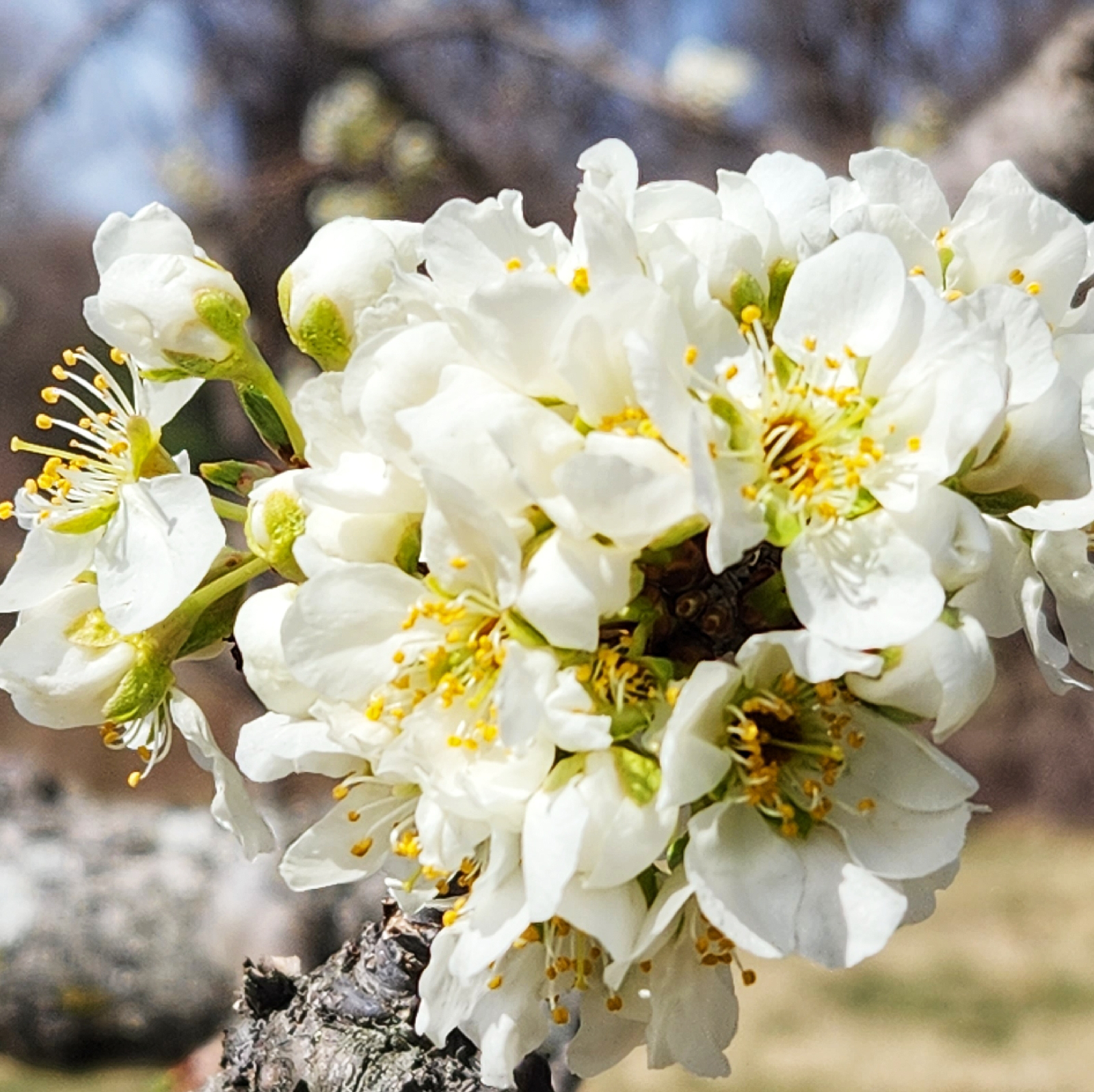
The plums have already started blooming heavily. We're also seeing little things like henbit and violets that are favorites of the bees but not at flashy as the trees.
The hives show a mix of recently capped (bright yellow cappings) brood and older (dark cappings) brood that should start emerging within the week. There are also plenty of eggs and young larvae. The queens are loading the place up with new bees. In most cases, what was a few frames of brood in a single box last week is already double or triple that in two boxes this week.
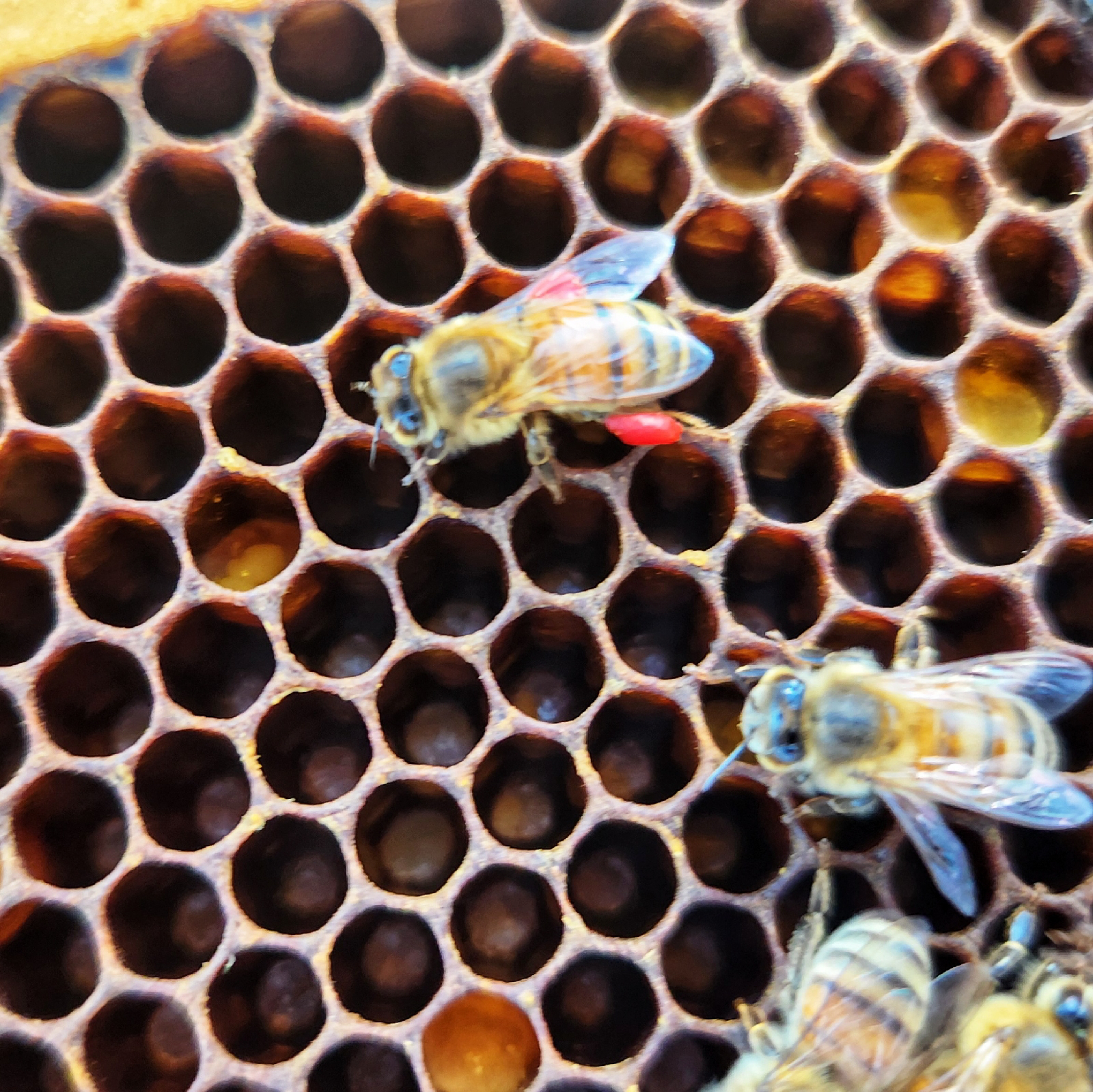
They're even making drone brood, which is obvious because their cells are so much bigger. Given that drones are the preferred host for varroa mites, this is probably a good time to do another treatment.
The rule of thumb is: one frame of brood = two frames worth of bees. If that holds true, we are about to be loaded with bees, which means I'll be heading off swarms by this time next month.
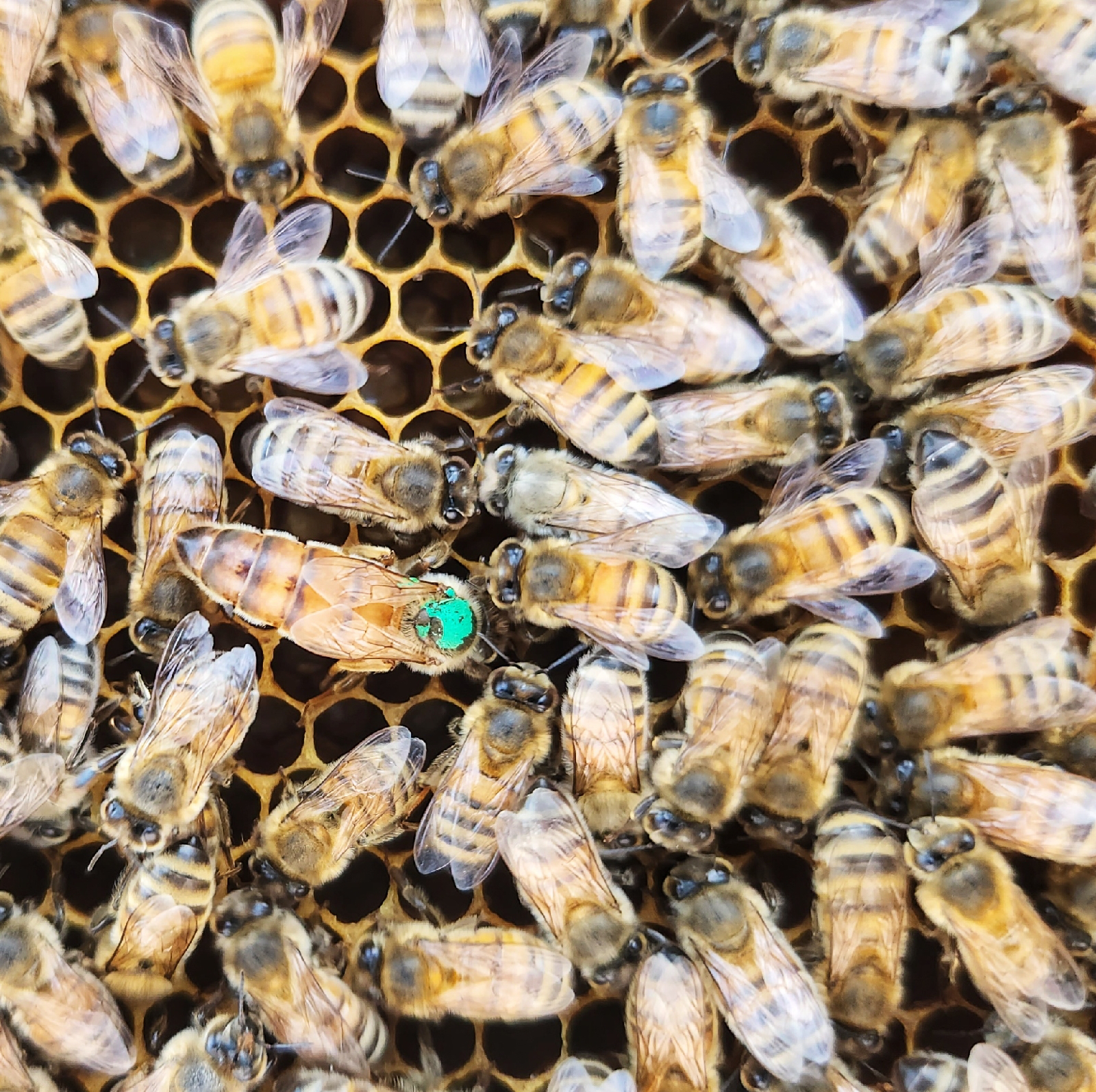
I also spotted the queen of the White Hive, who happens to have a white dot. She was part of a nucleus I bought last year to rebuild after my back-to-back bear attacks and has proven herself to be prolific.
This was the week that I gave the hives their first dose of 1:1 sugar water, a magical elixir that simulated a natural nectar flow and boosts the queen's egg-laying rate. 
(A bit of henbit pollen stuck in beeswax)

I'm not sure how much it was needed, to be honest, but it can't hurt, especially since I plan to use these hives to spin off at least two more hives this year. 


Thursday, March 13, 2025

First Inspection of 2025

Winter is always a tenuous time for beekeeping. You feed the bees in the fall so they can build up honey resources to live for the coming months, then you shut them away. Fingers crossed. If things go well, your bees will be thriving come March. If not, you'll find a dead hive filled with bees.

Last year, I had a hive die over the winter. It was too small going into the cold months, and I should have lifeboated them with a larger hive but I did not. Live and learn.

This week I made my first official visit to the four hives (White, Blue, Periwinkle, Yellow) to check on their status. I'm happy to say they are thriving. All four still have loads of resources -- primarily sugar water converted to honey that they didn't eat over the winter.

They are already packing in pollen from all over in all kinds of colors, including yellow, olive green and even hot pink! The pollen will feed the hives' growing brood as the world wakes up and the spring nectar flow begins. (Nectar is the foundation of honey.)

These bees are the tail-end of the "winter bees" that are born fatter and longer-lived than the summer bees. Winter bees live several months, rather than the month-and-a-half for summer bees. Winter bees, basically, keep the hive alive until spring.

During my inspection, I spotted two of my queens -- Periwinkle and Yellow -- which was good. They have green dogs on their backs, indicating that they were born in 2024. This year's queens, if I make any, will get blue dots.

I also got to see a new bee emerging from her cell after completing her pupation. She is the first a thousands more to be born in the weeks to come. Bring on spring!


Wednesday, March 5, 2025

The First Blooms

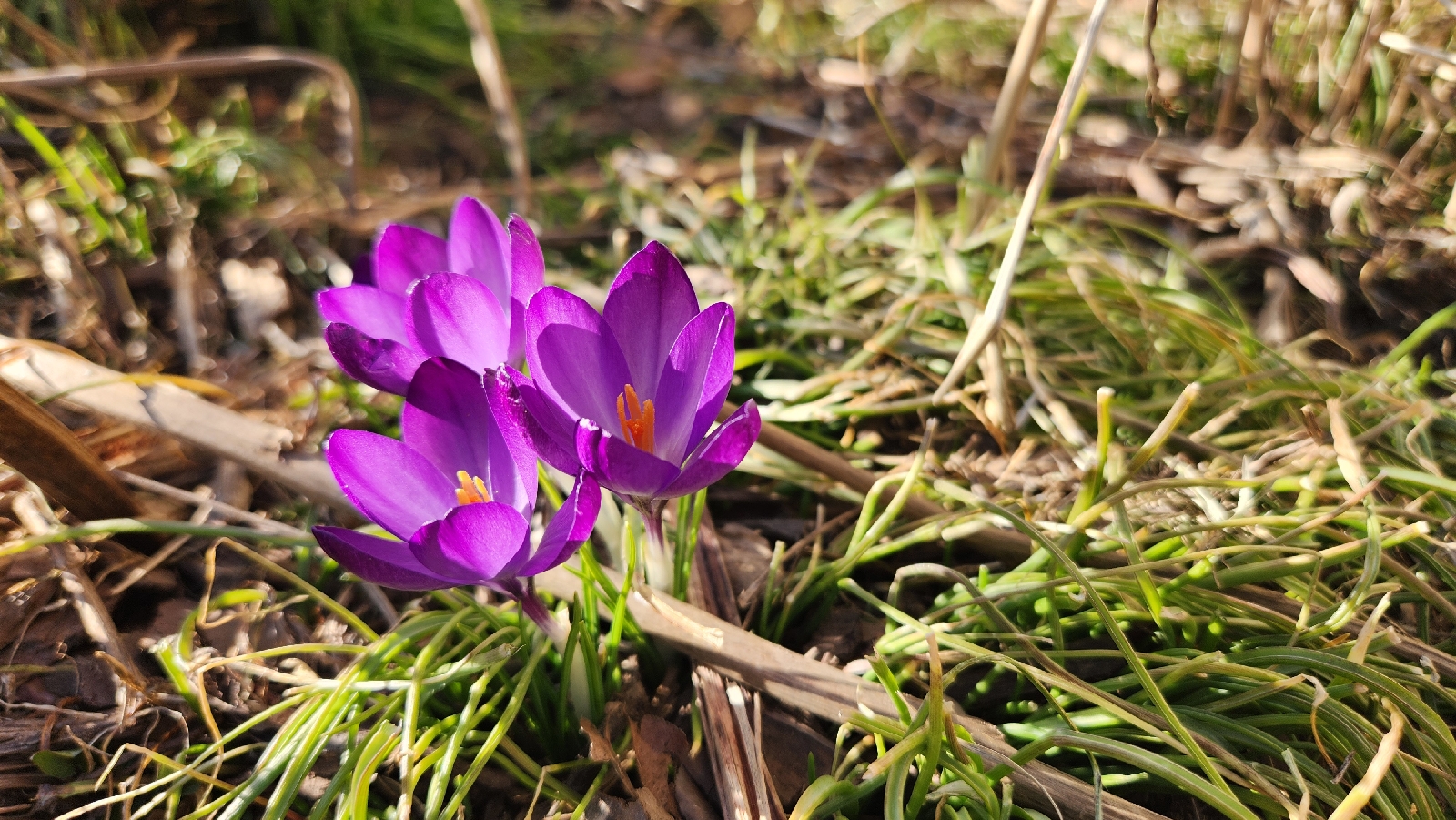
After a miserable, cold, and snowy February, we are seeing our first signs of spring -- the crocuses have started appearing!
They are following the hellebores (Lenten roses) that started appearing last week.
 Hopefully, these few brave blooms are the vanguard of this year's honey flow, which is running about a month late so far.

What's next to bloom?

Tuesday, February 25, 2025

Almost Spring

Winter has relented this week, giving the bees a chance to stretch their wings. 

Blue and Yellow hives were especially busy today as the midday temperature kissed 60 degrees. Blue has chewed through two sugar blocks, so I swapped a piece from White hive since they are still working through their honey stores. 

Today was also the first appearance of our hellebores, which means Spring is not far behind!

Wednesday, February 12, 2025

The Big Snow

It snowed all day on Tuesday -- full 12 hours later, we had nearly 10 inches of snow on the ground. 

Hoping to avoid the task of clearing snow from the entrances of my hives, I thought I'd try something new. I cut sections of PVC to serve as a sort of snorkel so the hives could continue to get air though the snow. 
My little experiment worked om two hives, White and Periwinkle. The other two, Blue and Yellow, have angled front porches that created a place for the snow to collect. Eventually, it covered the snorkels, so I had to clear them. 

Progress comes in small steps. I'll try long pipes or a new design for the next snow. 

Wednesday, January 29, 2025

Winter Warm-up


Today was the first day in more than a month that the temperature got above 50 degrees, which meant the bees had a chance to get outside, stretch their wings a bit and -- most importantly -- poop. Or as we beekeepers put it, go potty.

Bees don't do their business while inside the hive, so they have to hold it until the weather allows them to fly around outside. That typically means temperatures above 50, but I've seen a few bees out in the mid-to-high 40s. Those must have really had to go.

I took the opportunity to do a quick check on the girls just to see how things are going inside my four hives. This time of year, the check has to be as non-invasive as possible, so as not to cost the bees the heat they've built up inside. So I lifted the lids and removed the sugar boards to take a quick peek.

I'm happy to report that all four appear to be in good shape. White and Periwinkle were hunkered down down deep where they should be while a few bees came and went. Yellow and Mighty Blue were like Grand Central Station at their entrances with comings and goings while inside they were stacked to the rafters with bees. I'm taking this as good omens for what Spring will bring.

Each hive has a cake of sugar on top as a reserve food source for when they exhaust their honey supplies, probably around March. Blue has been chewing its sugar cake pretty much since I gave it to them in December. The rest have either left theirs untouched or just now started into them. 

I'll prep a few extra cakes for them this week to supplement their reserves through the end of the month. Hopefully, by that time, the flowers and trees will be blooming their heads off and the bees can start making honey.

Monday, January 6, 2025

Winter Bees


It's snowing outside, which means it's also time to clear the entrances on my four hives to keep the bees inside healthy with plenty of fresh air.

The question of where bees go in the winter is one I hadn't considered before becoming a beekeeper. Did they burrow in the ground? Or just die out while the next generation waited to emerge somewhere? The answer is neither.

Honeybees hunker down for the winter, riding out the cold weather in a tight cluster surrounded by the honey and pollen they collected during the summer and fall.

Actually, the bees that did all the work of gathering supplies for the winter are long gone by the time the first leaves begin to fall. That's because summer bees live around six weeks. They emerge and do their work more or less between March and about October, leaving behind a legacy that will carry the hive into the future.

The bees that ride out the winter -- the winter bees -- are fatter than their summer sisters and can live up to six months, giving them better odds of making it through to Spring. Snuggled inside their hives, they flex their wing muscles to generate the heat needed to keep the colony alive.

Like penguins in Antarctica, they rotate slowly between the heart of the cluster, where the queen stays, and the outer edges where the cold starts. Together, they can keep the hive temperature hovering around 70 degrees F, cooler than the 90+ degrees in summer but still plenty to keep everyone comfy.

Ideally, bees go into winter with food stores surrounding their nest and hanging over their heads. Over the course of the winter, they move up as they eat through their supplies. The risk is they'll run out of food before they run out of winter. I had the unfortunately experience last Spring of opening a hive only to find all of the bees head-down in their empty honeycomb. They had starved to death.


To prevent that, I give my bees blocks of compacted granulated sugar (aka candy boards) that they can chow down on while waiting for the Spring nectar flow to start. This year's blocks are smaller than they were last year, so I'll probably have to provide extra candy as they get closer to Spring.

In the meantime, I'll be pressing my ear to the hives between now and March to hear the girls humming to themselves all snug inside.

Come on, Spring!

February 2026 was the Month of Ice this year, so all of our early bloomers (red maples, hellebores) are running weeks behind. Bu...