Sunday, May 11, 2025

A New Queen in Town

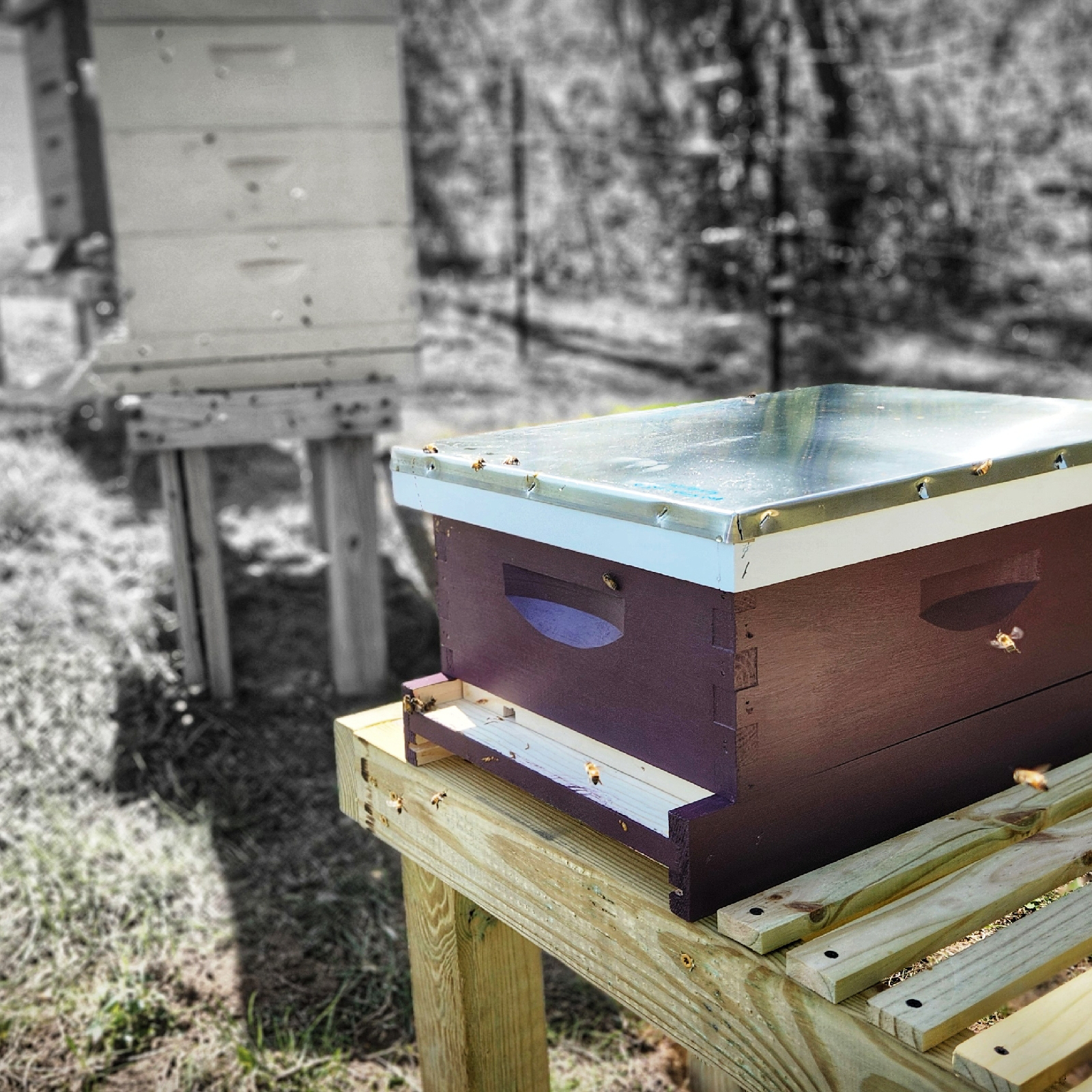
Several weeks ago, life in the Blue hive changed suddenly. While the hive was busy as usual, the eggs and larvae disappeared. 

That only happens when the queen dies or leaves with a swarm. 

In this case, it looked like the queen had died. She was always hard to locate and may have been killed during an inspection -- something that happens sometimes.

The bees quickly set about make several new queens using recently laid eggs. Queens take 16 days to mature and about a week to mate and begin making new bees.

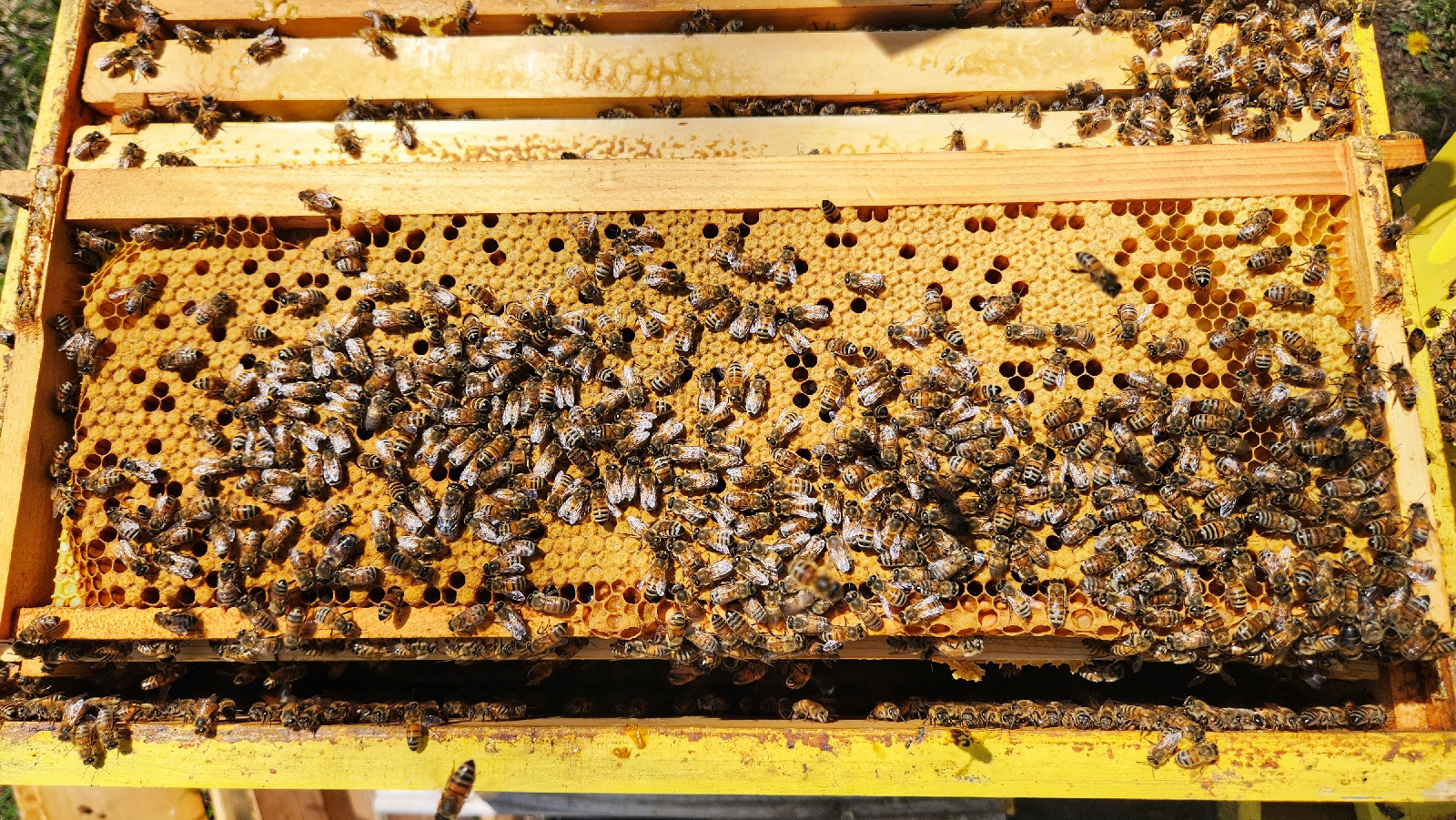
During the most recent inspection on May 9 I found proof that there's a new queen in town. 

Blue hive survived a bear attack last year and went on to produce almost 30 pounds of honey. They are double-tough.

Monday, May 5, 2025

Week 7: Going with the Flow

We are officially in the middle of the spring nectar flow, which means the bees are packing away all the sugary goodness they can find -- mostly from black locust, honey locust, black walnut, and black cherry at my house the moment.
The nectar flow triggers the bees to multiply rapidly. Between future bees and future honey, I am continually adding boxes and frames the apiary. The frames simulate the way bees naturally build honeycomb but hurry the process along a bit by giving them something to build on.
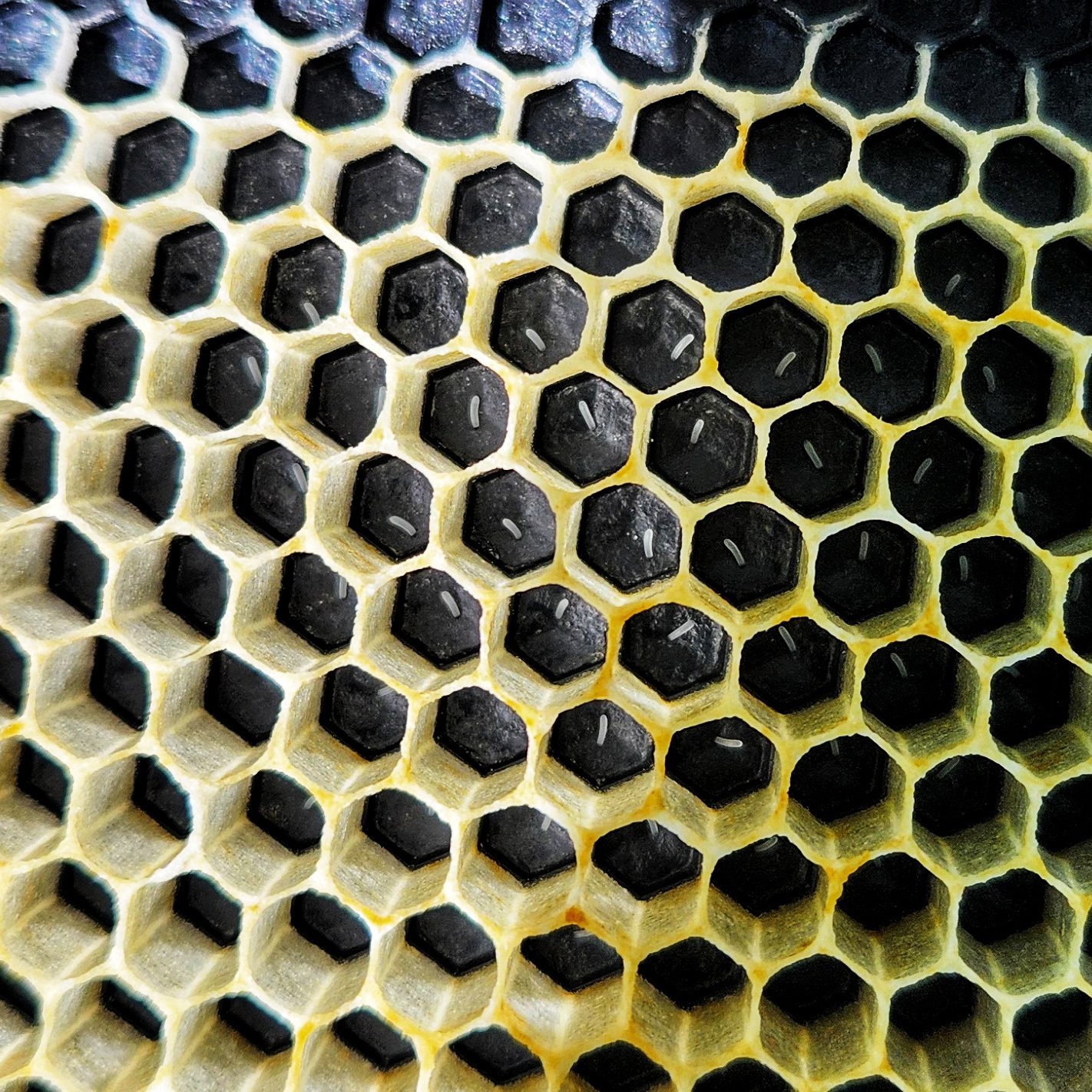
The process can take a few weeks as teams of young bees generate small amounts of wax from plates on their abdomens and build the honeycomb up bit by bit. What starts out looks like something from Tron eventually becomes storage for nectar, pollen and baby bees. (The rice-looking things are eggs.)


Tuesday, April 29, 2025

Week 6.1: Testing and More Swarms

Two of my hives (Perwinkle and Purple) have been showing sign of trouble with their larvae. Some of them are dying and turning brown in their cells. The potential cause ranges from starvation to a viral or bacterial infection.
So Katherine, our local VDACS hive inspector came by to test them. Both tested negative for the suspected problems -- American Foulbrood, which is a death sentence, and European Foulbrood, which can be treated with antibiotics. 
While we were checking on the problem hives, I noticed a big cloud of bees flying through the yard about 30 feet away. I thought they might have been mine getting stirred up by what we were doing. Then the inspector said "Looks like you've got a swarm." 
Sure enough, a biggish swarm was hanging on a branch about 20 feet up in one of our fruit trees. I rushed to improvise some equipment to catch them, but the vamoosed before I could catch them. Bummer.
Then Jen decided to go looking for them thinking they might be in another tree. Instead we found another, smaller swarm setting up in a hazel bush. Thankfully, this one was within easy reach, so I caught it and set it in the apiary   so I can move it into a new hive. I am out of gear, so they'll live two-flat style above another hive separated by the new screen board I cobbled together out of scraps this evening. 
If you're keeping track, I have gone from 4 hives to 11 in a month. That's life during swarm time.

Saturday, April 26, 2025

Week 6: Swarm season

File this under "Be Careful What You Wish For." I've been eager to catch a swarm since I started beekeeping two years ago. Last year, I strapped an old hive box to a tree along the edge of the property and baited it with lemongrass oil to lure in a swarm. Nobody bit.

Then this week, Jen said "I think you have bees in your box." And sure enough I found a small swarm had moved into the janky old box I had loaded with crumbling frames.

I collected them in a plastic nuc box and relocated them to the bee yard into a new White hive (White 2) that I bought on Saturday. They're calm, have a nice queen and a sugar water feeder. So, fingers crossed that they do well. They make hive Number 8.

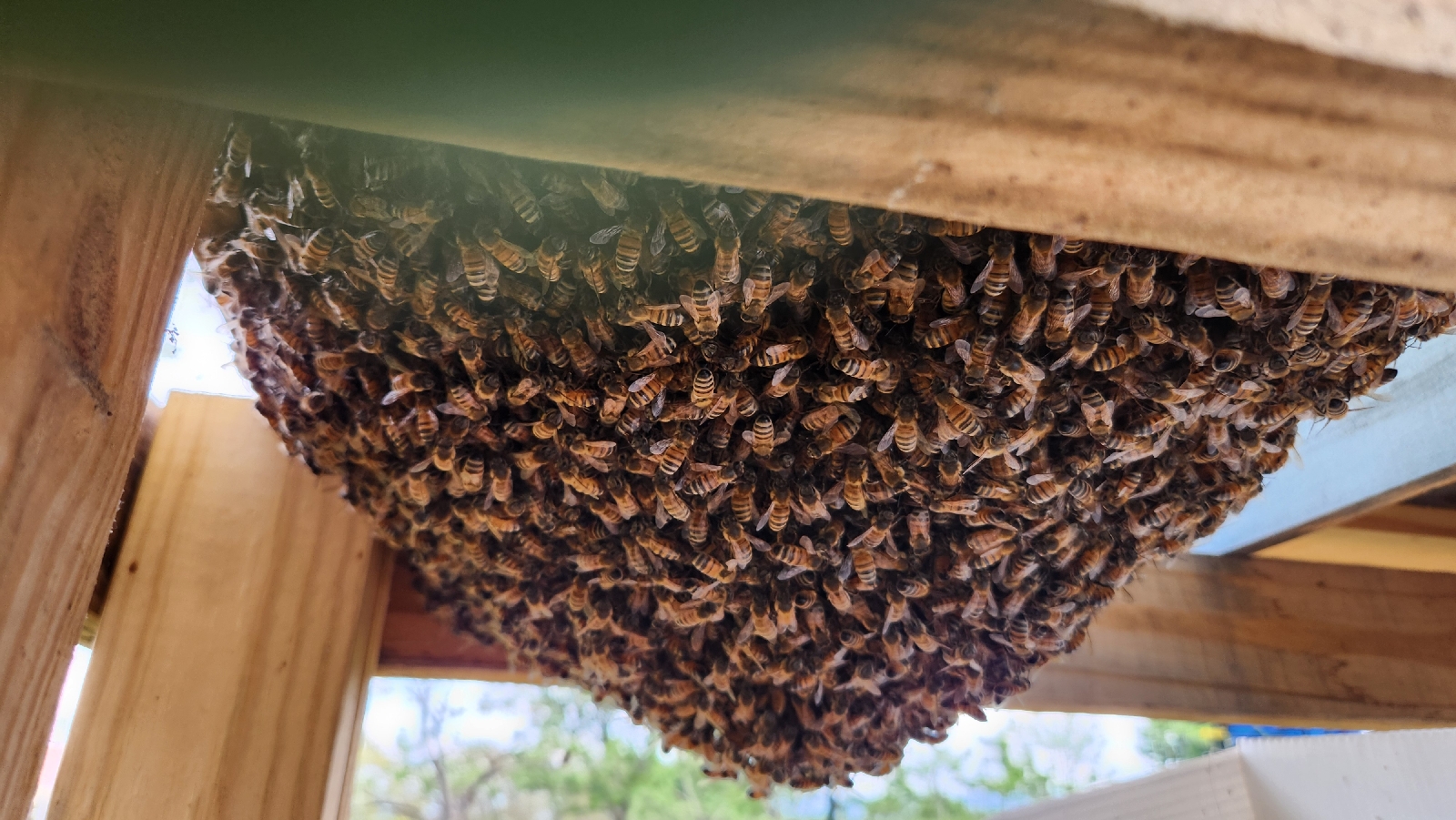
The same day, I walked up on the hill to do my hive inspection and found an enormous mound of bees hanging from the bottom of the Yellow hive. Wow! Two swarms in one day.

I've rehoused one swarm so far and that was cast off from the Blue hive a month after I brought my first hives home in 2023. That time, they moved into a peach tree near the bee yard, so it was easy to catch them. These guys, by contrast, set up in a space where they were tough to access. 

I slid a nuc box under them and scraped the mass off the underside of Yellow hive with my hand. They plopped into the open box but left loads of bees under the hive. Usually with a swarm, the queen is in the center of the cluster. Get the queen and the rest of the bees will follow. 

I figured I had the queen, but then everybody started moving back up the hive stand to reconvene under the hive again. If there was a queen, she was still under the hive. I tried repeatedly to locate her and get them to settle into the new box but to no avail. Now I suspect they were actually members of the Yellow hive that has gotten so big they needed to move outside for a bit. Something tells me I'll be splitting that hive again to reduce the surplus population.

Wednesday, April 23, 2025

Week 5.3: Meet the New Queen


Khaki hive has a new queen and she is lovely.

When I created the Khaki hive (named for the sandy-colored paint that I found leftover in the garage), I pulled a frame from the parent hive that had queen cells already waiting to emerge. A few days later, there she was. It was a good way to jump-start a new hive rather than dumping bees into a box and waiting for them to make a new queen (aka a walk-away split).

This new queen appears to have gotten out, done her mating flight and come home to start laying eggs. I'll soon need to add a second box to keep up with her. I'll also mark her with a blue dot to signify that she was born this year. (Last year's queen have green dots on them.)

Saturday, April 19, 2025

Week 5.2: And then there were Seven

I came out of winter with four strong hives that were filled with bees and raring to go. They very quickly multiplied in response to the spring blooms, sending foragers out to gather pollen and nectar from flowers showy (dogwood) and small (dead nettle).

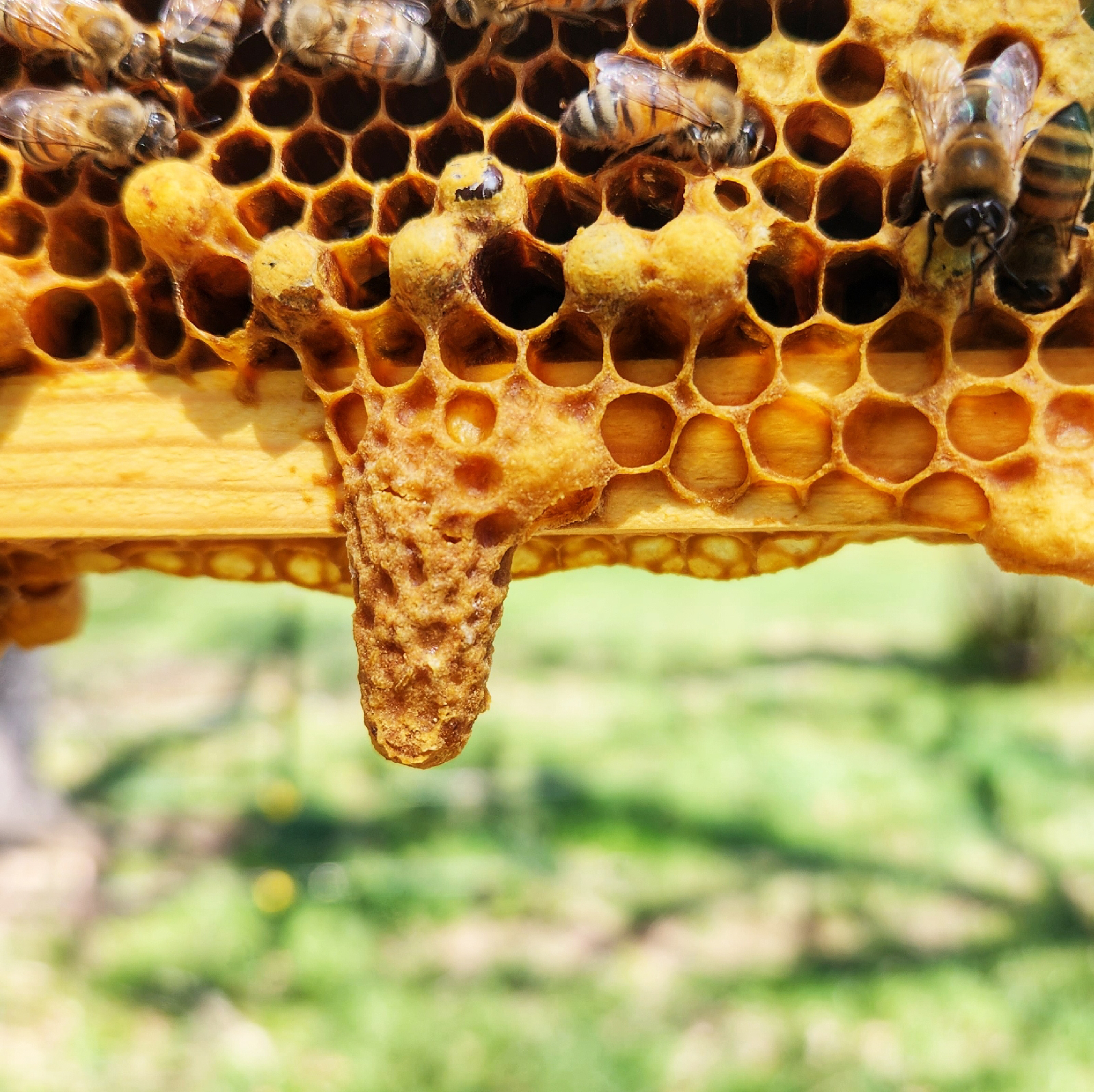
The challenge for beekeepers this time of year is keeping their hives from swarming. Swarms are a natural process by which colonies spin off new colonies in response to overcrowding and an abundance of resources. You know you're at risk of a swarm when you start seeing peanut-looking queen cells hanging from the bottom edges of the frames in a hive.

My answer to the swarm problem this year has been to make splits -- to take bees, larvae, pollen and nectar out of one hive to found another smaller hive. In the case of the new purple hive, I also had a Queen Cell to work with from the Yellow hive to jump start the growth of the new hive. Otherwise, the bees would have eventually made a new queen from existing eggs laid by the queen of the Yellow hive.

The purple hive brings me to seven hives at the moment from the four I started with in March. These three new hives are too small to produce honey this year, but they'll be the foundation for a new bee yard I'm hoping to start at Black Bear Composting in Grottoes.


Sunday, April 13, 2025

Week 5: Bursting at the seams

After three days on a school trip to New York followed by a solid week of cold, drizzly weather, I checked out the hives today to find them pretty close to bursting at the seams!

Blue hive, in particular, worried me when I saw this big of a crowd outside the entrance this morning. That kind of behavior when the weather isn't hot can indicate the hive is spoiling for a swarm -- something they do when they feel like they're running out of space in the main hive. I've been worried about the exact scenario for the past week.

Sure enough, when I got into Blue hive, the girls had built something like a dozen peanut-shaped queen cells. They were hanging down from the bottom of the frames in the third box -- a sure sign of swarm prep. I destroyed most of them and move one frame with three queen cells to a new hive along with about 5 frames of bees, brood, and food. With luck, that will reduce the population stress in the Blue hive, give them some empty frames to build out and they'll start focusing on honey production.

Blue hive has loads of space lower down in the hive for the queen to lay, so it's odd that they were feeling the need to swarm. One possible solution would be to reverse the hive boxes -- put the empty bottom box on top and the upper box on the bottom. It's a controversial method of management, but it might trick them into thinking they have space.

The other option for any of these hives as they get full of bees is the Demaree split -- essentially to divide the hive in two, isolating the queen with plenty of empty cells to lay in while the rest of the bees continue to harvest nectar and honey like normal. I haven't tried it yet and I've used all my built-buyt-empty frames for the moment, so it's likely I won't be able to try that method as I had planned.

Orange was the new pollen color this week -- most likely from the dandelions that are popping up everywhere after last week's rain. As much as lawn lovers hate dandelions, bees love them. They're a major source of nectar and protein in the spring.

The queens are all laying amazingly well. They're young and full of life (literally) and it's not unusual these days to see frames that have brood from one side to the other. The one exception is Periwinkle hive, which seems to be having a flare-up of chalkbrood again. The disease is caused by a fungus that destroys the nascent bees before they can mature. I found several frames with shriveled larvae that had turned black. I pulled those frames to avoid spreading the disease more than necessary.

After making a split out of the White hive two weeks ago, I started another new hive -- the Khaki hive until I come up with a better name -- by pulling queen cells, brood and food from the Blue hive. With luck, the new queen will emerge there in a few days and start building that hive. If she's anything like her mother, she'll be prolific!


Come on, Spring!

February 2026 was the Month of Ice this year, so all of our early bloomers (red maples, hellebores) are running weeks behind. Bu...